- +920-202-3536
- service@mbintegratedpestcontrol.com/
- Mon - Fri: 08.00 - 17.00




Ants are one of the most common pests in and around homes in Wisconsin. Queens are the largest members of the colony, often two to three times larger than workers. Queens possess wings but break them off after mating. They have very large abdomens and can live for a number of years.
Argentine Ant
Carpenter Ant
Pavement Ant
Odorous Ant
Fire Ant
Pharaoh Ant
Thief Ant
Ants are one of the most common pests in and around homes in Wisconsin. Queens are the largest members of the colony, often two to three times larger than workers.
Queens possess wings but break them off after mating. They have very large abdomens and can live for a number of years.
Males and queens will swarm (i.e. fly) from their nest to mate. A given species will mate during a specific time of the year.
After mating, the female seeks a proper nesting site and begins a new colony. The presence of swarming winged ants inside buildings is an indication of an ant nest indoors.
Ants are sometimes mistaken for winged termites that are commonly called "swarmers". Ants differ from termites by having a narrow, constricted waist, elbowed (bent) antennae,
and hind wings shorter than front wings [see below image]. Termites have a more rectangular shaped body with no constrictions, straight,
beaded antennae and four wings of equal size and shape that are much longer than the body.
Argentine ants have become global, found in every country. When this ant invades, it devastates the native insect communities while promoting the population growth of agricultural pests. Colonies may contain hundreds of queens and can grow and populate an area the size of a normal city block.
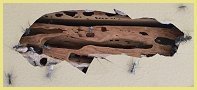
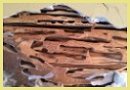
Carpenter ants DO NOT eat wood. They REMOVE WOOD as they create galleries and tunnels. Most foraging is done at night between sunset and midnight during spring and summer months. Sometimes workers travel up to 100 yards from a nest in search of food. Colonies can contain up to 50,000 workers.
Large colonies can have up to 250,000 workers. Fire ants inject painful venom through their stingers. They are very active and aggressive and will sting humans and animals repeatedly, which can sometimes lead to death.
When crushed, give off a very unpleasant odor, similar to rotten coconuts; colonies are very large. They can nest in homes in walls voids and under floors. Odorous house ants do not cause structural damage to buildings.
Slow-moving. Commonly found under homes with concrete slab construction; ants enter homes through cracks in the concrete.
About 1/16-inch long. Very large colonies with up to several million workers and thousands of queens. Generally, there are no disease problems associated with ants. In hospitals, however, Pharaoh ants can transmit disease organisms, such as Staphylococcus.
About 1/32- to 1/16-inch long. Also referred to as grease ants. These little guys are difficult to detect, often confused with Pharaoh ants,
are very persistent and difficult to control (best to have these ants identified by an expert--proper identification is very important before pest management steps are taken).
Thief ants are so named because of their habit of nesting near the nests of larger ants and stealing their larvae.
For more information about the above ants and other Wisconsin ants, please visit University Extensions consortium of Minnesota, Wisconsin and Iowa.